
Hello friend, and thank you for coming back to How We Listen for this third issue. Our interview today is probably my favorite I’ve done so far, and I can’t wait to hear what you think about it. Oh, thought I’d mention this particular issue was edited while listening to Greg Freeman’s brand new release “All Set The Bone.”
If this is your first time coming across HWL - welcome to the crew, and thank you for being here. Here at How We Listen, we love music discovery. It’s becoming increasingly hard to find time for it these days, for many, many reasons, but there is still plenty of joy to be found in it. The guests that come onto the newsletter every two weeks certainly believe so too (you can read issue 1 with Giles Bidder of podcast 101 Part Time Jobs here, and issue 2 with Anahita Shamsaei of the label/community Makaan Records at this link).
With every issue, you also get a 7-song playlist with songs I think you’re going to like, plus a handful of recommendations of the best music-related reads (or videos, or podcasts, or artists) that you can spend your time with. Keep scrolling to find all that.
You can of course subscribe (for free! no transaction!) to receive our bi-weekly issues in your inbox by typing out your email and clicking the button below. Should you ever want to reach me, feel free to email howwelisten.newsletter@gmail.com.
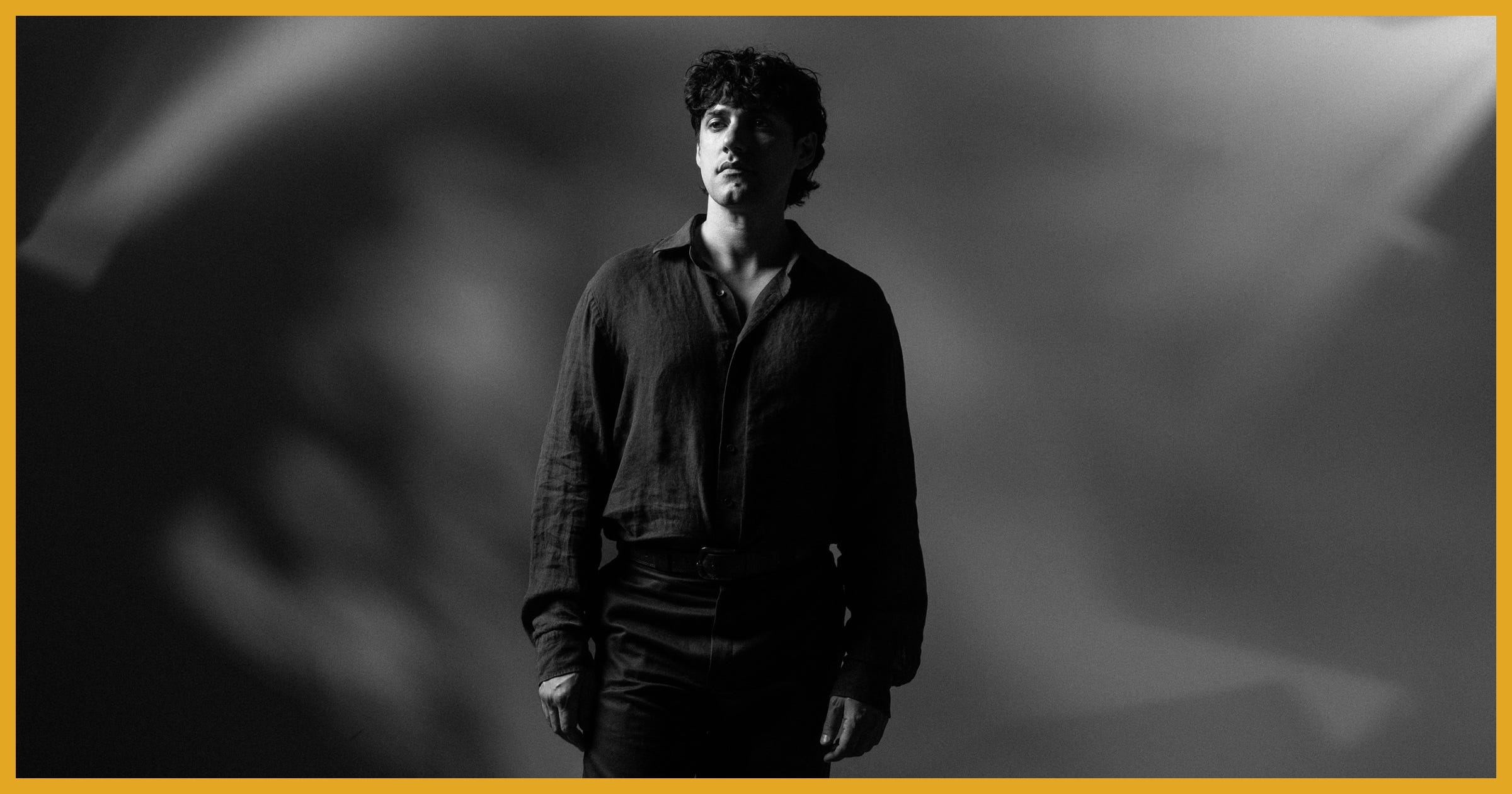
I thought the season would have shifted by now but we’re luckily getting one more day of warmth in London, and we’re just as lucky to have an interview with Joey La Neve DeFrancesco coming up in the third issue of How We Listen. Joey is a very busy person: in 2020, as the COVID pandemic brought everything to a halt, he was part of the group that founded the United Musicians and Allied Workers organization, also known as UMAW. The collective aims to unite and organize musicians in the United States and beyond to educate, to help, and to obtain better working conditions not only for its members but for the wider music community in the country & the world. Joey’s years of experience in both organizing and as a musician, via projects such as punk band Downtown Boys (whose latest record Public Luxury came out in June) and solo endeavor La Neve, contributed to several campaigns that UMAW has spearheaded. These include the proposed U.S. federal bill The Living Wage For Musicians Act which UMAW co-authored, as well as their fights for increased and fairer pay at Austin’s multi-day festival South by Southwest, where they are also campaigning to keep war-profiteering companies & sponsors away from the event. If you’re interested in joining UMAW, their website is the best place to gather information and get involved.
Joey joins How We Listen to chat about his history spread between playing music on the road and unionizing, UMAW’s efforts, becoming enamored with artists who stand for something, and how he listens.
WHAT YOU SHOULD BE READING / WATCHING / LISTENING TO
THE AFTERLIVES OF OKAYPLAYER (Hearing Things)
Message board Okayplayer was founded by Questlove to unite fans of The Roots, only to become an online hub where Black music flourished throughout the 2000s. Its community moulded groups such as Little Brother and influenced trends long before social media as we know it was a thing, and before labels properly understood what they could do with online audiences.
“The first Drake song I heard (in 2007, well before he took over the radio) was on Okayplayer, and it featured Little Brother. In 2011, a fresh-faced Drake was interviewed alongside 9th Wonder and said his goal at the time was to get a No. 1 hit with a song produced by the Little Brother beatsmith.”
HOW THE FOUNDER OF LADY GAGA’S BIGGEST FAN SITE ENDED UP IN PRISON (Pitchfork)
Unbelievable story that might have crossed your radar already: the owner of a massive Lady Gaga fan account went to prison in Belarus after attending a protest in early 2024. The account was kept alive by friends who contacted him through his lawyer. He has since been released and caught up on news from Gaga world that he had missed.
“Abracadabra’ came out in February of ’25 but it took a little bit to reach our radio. I did know that Gaga came out with a new song, and I knew the name because some of my friends told me in a letter. Then it came on one day and I knew immediately; I recognized the voice, recognized the beat. I’m not going to romanticize this too much because I had other things to worry about, but wow, I was shook. It came to me that, for the first time in maybe 20 years, I was hearing a song without hearing any snippets, without knowing what people thought about it.”
I attended the recent (triumphant) Exploring Birdsong show at Islington Assembly Hall (in London, UK) and was pleased to see that the venue has started running contests & giving away prizes to punters who show up early to watch the opening bands. Fair play.
HWL #03 - The Mixtape
Before you dig into the interview with Joey just below, make sure you check out the latest HWL mixtape, and click that Save button so you can come back to this issue’s 7-song playlist.
This mixtape’s cover is graced by YEИDRY, Dominican-Italian artist who just dropped a wonderful, critically-acclaimed, multilingual debut inspired by a life living in three separate countries and having to learn how to adapt. The full album is worth listening to if you’re into Latin music at all, and I’d recommend reading this lovely (paywall-free) New York Times profile if you want to learn more about her journey.
Also on the playlist: Joey’s recommendation Yasmine Hamdan, plus new tunes by Crawlers, Australian hardcore band Primitive Blast, Secret Choir, the elusive Pollyfromthedirt, and a standout, chill, rap-infused song from British electronic producer Jam City who has also just released a new album.
Joey, thank you for joining us and welcome to How We Listen. Let’s start with the tough questions. Who is Joey DeFrancesco in a nutshell?
I’ve been a musician for many years, now mostly with the band Downtown Boys where I am a composer and play guitar. I’m also the founder of a group called United Musicians and Allied Workers, or UMAW, which is a musicians’ union.
We’re everywhere in the world, though we’re largely centered in the US and North America. We try to organize artists collectively to take power back in the music industry, to better distribute resources in the industry, to get artists paid more fairly, to organize artists in solidarity with Palestine and the BDS movements, and much more.
UMAW started during COVID. You’ve gone on to gather a thousand-plus members, you’ve started several campaigns, co-authored The Living Wage For Musicians Act, and more. What was it specifically about the pandemic time, what made that the moment to get going?
I had been touring in Downtown Boys and other bands for many, many years. I was involved in labor organizing for many years. When I was younger, I was organizing hotel workers in Providence, Rhode Island, at a hotel I worked at. I had, for many years, talked with other musicians on the road, other musicians we were working with, about all these terrible conditions in the music industry and had done some shorter, smaller efforts to organize artists.
For instance, in 2017 around the South by Southwest music festival, when the festival was working with ICE to threaten to deport foreign artists who were supposedly breaking South by Southwest contract clauses. There was also an effort to boycott Amazon Music around the same time period, over Amazon’s working with the Trump administration and with ICE.
Then 2020 hit, we had a network of artists who I had worked with and done organizing with in the past who were suddenly all out of work. It was a huge thing with COVID: you had artists who suddenly had a lot of time [on their hands] because nobody had any income anymore, all touring was shut down, and so on.
The contradictions and the wealth disparities in the music industry that already existed really intensified during COVID. We saw, for instance, Spotify double or triple its valuation at the same time that every single artist was totally out of work, totally out of business.
So I think people were very angry and also had free time suddenly to start organizing. It was a very active time politically for a lot of people. There were these massive protests around Black Lives Matter, there was a lot of organizing for other types of independent and precarious workers in the US to get unemployment benefits, and that was some of the first UMAW campaigning.
In the US, you don’t get unemployment benefits unless you have a very standard employer-employee relationship in your workplace, or your former workplace. Musicians don’t have that, so at first we were not eligible for unemployment benefits and other kinds of benefits during those early days of COVID. So I think there’s a lot of factors that finally got us all together into these rooms to begin realizing this idea that I think a lot of us had had for quite a while.
One of the things that struck me about UMAW, other than the campaigns that it has led, was the internal communication service you have for your members which seems like a vital resource. Why do you think that part is so important to them, and how much of the job is educating? People might know what they’re fighting for, but may not know how the process works.
The theory of change we had at UMAW from the beginning was that us, as artists, and particularly the type of artists UMAW organizes - largely middle level, smaller artists – where we have power is through organizing large masses of people.
And this is true of any type of worker, right? You only have power when you unite with your other workers and act collectively to fight back against the boss, and to take back your resources and your power in that workplace. So for UMAW, from the beginning, we knew we were not going to be some kind of very top-down non-profit, where we just have a few staffed people who send out communications and put out reports and stuff like this. No, our goal from the beginning was to get as many people involved as possible. And we have a very broad tent, a very broad definition of who can join, who counts as a music worker, and so on.
We very much value, as you mentioned, keeping everyone up-to-date with everything when we have organizing events and need to turn out for a protest action, for a city council meeting, to make phone calls to lawmakers, whatever it is. We really focus on activating our members. We have a couple thousand people who are paid, more formal members, but we have tens and tens of thousands of people who are in our broader network of email lists, Slack channels, and social media. So our principles, our power, come from mass organizing, and that’s what we try to focus on.
Another part that stood out to me was your Office Hours program, the educational series UMAW hosts for its members. I’m aware it might just be one an “extra” and not your central offering, but as we both know very well, the music industry is so hush-hush about almost everything. And when a musician, or anyone else, finally speaks up about something, people are always so surprised to learn how things work because plenty of things are just simply left unsaid. How did the concept of the Office Hours start, and why did you feel it was needed?
We’ve done the Office Hours as well as some other popular education efforts, but that was definitely our biggest series. You’re right, so much of the music industry is very cryptic and very difficult for a lot of artists to follow what’s actually going on, particularly things like royalty payments or how streaming payments actually work, or how booking breakdowns work at different venues. A lot of the industry’s exploitation is really underpinned by a lack of information, a lack of knowledge sharing.
Take something like booking. It’s very hard to know [how a lot of it works] unless you work with an official booking agency. And even then, what are the guarantees other bands are getting? What are the deals and the door deals other bands are getting? What standard can you ask for from a venue?
This stuff is kept in the darkness because it benefits the employers, and the big labels and the big companies involved in the music industry, to keep this kind of stuff in the darkness. So when we can do stuff like our Office Hours education series, just doing popular education and other mechanisms and panels we’ve had as part of our protests, the more we can expose this stuff in the music industry and get our members and other music workers knowledgeable of how the economics and power in this industry actually work, the better we can then organize people and make musicians feel empowered to demand what they deserve.
WHAT YOU SHOULD BE READING / WATCHING / LISTENING TO
PASSING HER THE AUX (Another Thought)
Heartwarming essay on music newsletter Another Thought about learning how to relate to a young child’s growing music taste, as a parent whose life revolves around this particular art form - from the impulse to attempt to mould them, to the realization that they will be shaping your taste sooner rather than later. I’m at the age where some acquaintances have had kids, but most of my closest friends have not yet. Can’t wait to see how they approach this.
“Then a little voice chimes in from the back: ‘Add this to my playlist, Dad.’”
A HISTORY OF HIP-HOP’S OBSESSION WITH LEAN (Hearing Things - £$£paywalled£$£)
Traces a history of the prescription-drug-turned-recreational-hazard that is codeine and particularly its mutation known as lean (but also as purple drank, sizzurp) and their relationship with rap. Those not tuned in (me included) might not know where the connection between the genre and this particular opioid started, or that lean has been so intertwined with it that separate trends in musical output through the years can be used to interpret availability as well as popularity of the drug at a given moment in time. Nearly three decades and multiple high-profile deaths later, it’s still taking lives.
This paywalled article can be read for free by signing up to Hearing Things with a free trial.
7 MUSIC WEBSITES YOU’VE NEVER HEARD OF (BUT ABSOLUTELY SHOULD KNOW) (Meg Shara)
Seven unconventional (online) places to expand your horizons. Including the author’s own intriguing project cassette, where you can recreate digital versions of mixtapes complete with liner notes, lists and more: free from advertising, algorithms or comments.
You founded your own band Downtown Boys with people you had met at a hotel you used to work at, during union meetings for the hotel’s workers. From the very beginning, clearly, Downtown Boys has been a politically charged band. Your new album is the first one since UMAW started: has that had any direct impact on the band?
That’s a good question. I think it’s had an impact on my time. If I didn’t do UMAW, maybe we would have gotten it out a little bit faster. But everyone in the band has been doing different organizing projects and other projects this whole time.
UMAW, as I was explaining, I think was a natural offshoot of other organizing I and the rest of the band were doing already. So I don’t think [this new record] is that much different in terms of outlook, or political messaging. I’ve certainly come out and been much more vocal as a critic in lots of parts of the music industry. Who knows to what extent that’s maybe made it harder for Downtown Boys to be heard, or get covered or booked places, if there’s any of that kind of retaliation going on.
The music industry has changed a lot this time around, the last nine years… Putting out the singles we had on this record, there’s so many fewer music outlets willing to cover smaller bands, or explicitly political bands. The algorithms, whether it’s Spotify, YouTube, Instagram, are just so much more of a driver of everything than they were even 10 years ago. It’s certainly a disheartening industry to be working in, but there’s still a lot of people who are still pushing to make sure stuff is heard and listened to and thought about in serious ways.
I’m not sure how much UMAW informed exactly the songs we’re producing and all of that, but it’s certainly part of this very different context we’re going to be releasing this record into, absolutely.
AI is the next important barrier facing the music industry, and I’m sure this is discussed often within UMAW. It’s also one thing where all the arts seem to be - or at least are destined to be - fighting or trying to regulate together. Do you see a world where unions in music, film, and everything else work together towards resolution or hopefully making some sort of sense of how AI is progressing and affecting different fields?
I think you’ve already seen it in the US. I don’t know what the situation is like where you are, but in film and TV, a few years ago the Writers Guild of America and the Screen Actors Guild both had quite long strikes of more than six, seven months that were massive across the country, but particularly in New York and LA. Both those groups were negotiating their new contracts, and they won - this was in 2023, I believe - so this was still [towards] the beginning of some of this AI tech stuff.
They won, in their contracts, some great protections against AI, including things like: AI can’t be in writers’ rooms, AI can’t be used on scripts that are copyrighted, SAG-AFTRA won protections against actors’ likenesses being replicated with AI against their consent, or without their consent.
That stuff was won not through vague online discourse, or individualistic opting in or opting out; it was won through the labor movement, and there’s still a lot more to win. But these were significant victories – I feel like they aren’t talked about enough – and there’s no reason musicians cannot win similar protections. We’re finally seeing more traditional union structure in the US for musicians; the American Federation of Musicians fighting back and running lawsuits against Suno and some of these AI companies.
We think they need to be doing more to push back against them, but if musicians were more organized here and anywhere, I think we’d have regulations in place to where a company like Suno just really should not exist. We shouldn’t have these backroom secret deals that Spotify is cutting with these AI companies. And yeah, we need lots of regulations, including the Living Wage for Musicians Act, which is the big bill that we’ve been pushing to re-regulate streaming, but it also specifically cuts out in the bill to say that only human artists should be paid this new royalty we’re creating, and it’s not going to get paid out to AI production companies and so on.
There’s a lot that needs to be done, but I think the fundamental thing is that artists need to be more organized, like the TV actors and the writers are, so we can get these protections.
We’ll come back to the Living Wage for Musicians Act and other UMAW campaigns in a second, but I did want to ask about how it all started for you, discovering music as a kid. How would you normally find artists that you’d fall in love with?
A lot of those were word of mouth from friends. I am old enough to remember: the internet was there, but it was mostly file sharing still, pre-streaming. So I would look at music websites, good music journalism on Pitchfork, Brooklyn Vegan or whatever blogs I was reading that I can’t quite remember the names of right now, to find newer stuff and stuff that was exciting to me.
I think it was an interesting time to be a young person, getting excited and getting into music, because it was post-Napster and file sharing coming out. It was also post-MTV as real music discovery, there was MTV but at that point it had already transformed into something that wasn’t playing new exciting music anymore.
I think a lot of it was happening in early internet music journalism that was very thoughtful - not always very thoughtful, I’m not defending everything that was on Pitchfork in 2010, or whatever - and there was just more discussion going on. There wasn’t as much corporate consolidation in media, it wasn’t Penske Media owning every single music website, or Condé Nast owning every single music website.
You could have stuff that was more unusual, more varied, more strange. You could have local music message boards and blogs existing to recommend stuff. And once I got into playing music, so much of the music discovery was from bands we’d play with. Or when I was running a show space in Providence, it was bands that would come play the shows with us, and that we’d become friends with.
How has that changed for you? How do you go about discovering new artists in 2026?
My favorite way is still via seeing artists live. We’re about to go on tour again in a serious way, which we haven’t for a while, and for instance we’re playing a bunch of shows with a band called Pop Music Fever Dream. That’s a newer band in New York, and we’re doing a little tour with them. It’s been exciting to be listening to them, and I’m pumped to be performing with them a bunch.
There are people that are in the UMAW network who I’ve gotten really into. There’s a Lebanese artist named Yasmine Hamdan who is incredible. Her record, “I remember I forget” was one of my favorite records last year. One of the first things I was listening to was a video she made for one of her singles last year, this beautiful video for the title track, I loved the animation. I then contacted the animator for that video to make the video for our single that came out a few months ago, called “You’re A Ghost”, who did an incredible job.
I feel like just from looking up that animator’s work, and what artists he has worked with, what artists Yasmine has played with, I end up finding a lot of stuff that I’m excited about. This kind of connection via a broad sense of community of people I’m working with, or playing with, or who join UMAW, that’s also become a cool kind of music discovery mechanism for me. Meeting so many new people and so many new artists, finding out what their projects are.
Continuing to prioritize that kind of community - whether it’s bands I’m playing with, artists I’m working with, bands I happen to see opening for a different band that I love in New York, people I’m organizing with - having that kind of personal connection for me is always very meaningful for adding context to the music and making it mean something.
Would you say you need to have that added context in order to pay more attention to something?
I don’t know if there needs to be, but in terms of thinking about music in the sense of building this community, I think it makes it mean a lot, and for me it makes it certainly more meaningful. I think it’s a good antidote to just being fed endless stuff on a Spotify auto-generated playlist that the algorithm wants you to listen to.
If you think about other sorts of media or art - films, books, even journalism. If a recommendation comes your way, do you welcome the same kind of added context? Or is that something specific to music that makes it more personal?
I think it works similar for whatever you are working with. If your friends are recommending something to you, or you’re seeing a film… I don’t mean to say that you need to know the film director to appreciate the film, but understanding the context they’re creating this in, understanding what it is coming out of, certainly makes these works more meaningful.
I think it is important as, again, a counterpoint to this AI slop that quite literally has no context, or algorithmic recommendation systems which are also designed to remove the context of listening to an album, or being a fan of the band. But having these AI-generated auto playlists and everything, feeding us everything from films, to summarizing articles, to creating music playlists, whatever it is, it by its nature strips all of that of its meaning. I think if you really want to feel something with the stuff you’re listening to and reading, I think it’s important to try to add that context back in.
You’ve mentioned a couple artists you’ve enjoyed recently, and word of mouth is central to this newsletter. Are there other songs or albums or artists that you want to shout out?
I want to shout out that Yasmine Hamdan record again, I think it’s a really important record that is written in the context of three years of Israel’s genocide in Palestine, and now the invasion of Lebanon. I think it’s very, very difficult to create a record in response to something that’s still going on right now which is so heavy, and still make this record that is musically beautiful and meaningful. It stands out to me as something really special and beautiful.
The last few months I’ve been really obsessed with the band Crack Cloud. They’ve gotten press attention here and there, they have somewhat of a fan base but their last couple records haven’t been quite reviewed as much, maybe because they’re just so prolific. But I think they are really one of the smartest, most exciting bands out there.
I recently saw my friend Katie Alice Greer perform her new record “Perfect Woman Sound Machine, Vol. 1.” Katie was in a band called Priests that Downtown Boys played with a bunch in the mid-2010s. She just put out this new record in April of this year, which is great. It was really cool to see her performing.
I want to finish by asking you about the wins you’ve had so far with UMAW. What’s the campaign that you point to first when talking about the organization? What’s the defining UMAW moment so far?
Our biggest win that is a clear win has been getting raises and BDS commitments from SXSW. After campaigning the first year and second year, we won pay raises for artists for the first time in decades for that festival, via our collective organizing. And we also won – via our campaign along with the Austin for Palestine Coalition – a commitment from the festival to kick out the weapons manufacturing industry and the US military from sponsoring or presenting at the festival.
But there’s still work to be done, right? They backtrack on both these things a little bit every year, including at the SXSW London that happened recently, where Hasan Piker was scheduled to speak and they didn’t defend him when the UK government prohibited him from entering the country. There’s still a lot of work to be done at SXSW, but it was our collective organizing and artists coming together that actually won pay raises for thousands of artists at that festival.
It’s the first time this has happened at a major music festival like this. It’s really kind of a proof of concept for UMAW, that we can do this kind of mass organizing of artists and wield this collective power and win real victories like that.
Thank you, Joey. You guys are doing something very useful & important.
Excited to see this come out. Thank you for involving me. Sounds like a really cool, important thing to be getting out there.
This interview has been edited for length and clarity.
Huge thanks to Joey for joining us for HWL #03, but thanks to you too for coming back to read it!
This newsletter grows via word of mouth, as does the music we share. If you like what you’re seeing, a share on social media really does go a long long way!
See you in two weeks, and before you leave - listen to another of Joey’s most enthusiastic recommendations right here: