
Good morning! And thank you for joining me for the second issue of How We Listen - your friendly local newsletter celebrating the art of music discovery.
First things first - THANK YOU for being so kind and supportive of this launch and the 1st issue. I’ve been positively overwhelmed by the love shown by so many people I trust and respect. Very grateful.
If you’re just joining us now - welcome! How We Listen is a bi-weekly music newsletter focused on discovery. Every issue comes with an interview with a very cool someone who loves music more than almost anything else, where we chat about who they are, what they do, and how they find new artists to fall in love with. We want to celebrate the joy there is in being intentional! Additionally, you get a new 7-song playlist with every issue, and recommendations of the best articles / features / podcasts / etc that you should be reading, watching or listening to in the next couple of weeks.
Don’t forget to subscribe if you haven’t yet (button below!)
Our first issue featuring Giles Bidder, host of the podcast 101 Part Time Jobs, is available to read here. Oh, and you can read a little bit more about the newsletter on our About page.
Before we get into this issue’s guest and our recommendations of the week - I thought I’d once again mention that you can always reach me for your own suggestions (music, articles or podcasts to highlight, guests you think we should have on, unsolicited advice and insults, whatever you fancy) at howwelisten.newsletter@gmail.com.
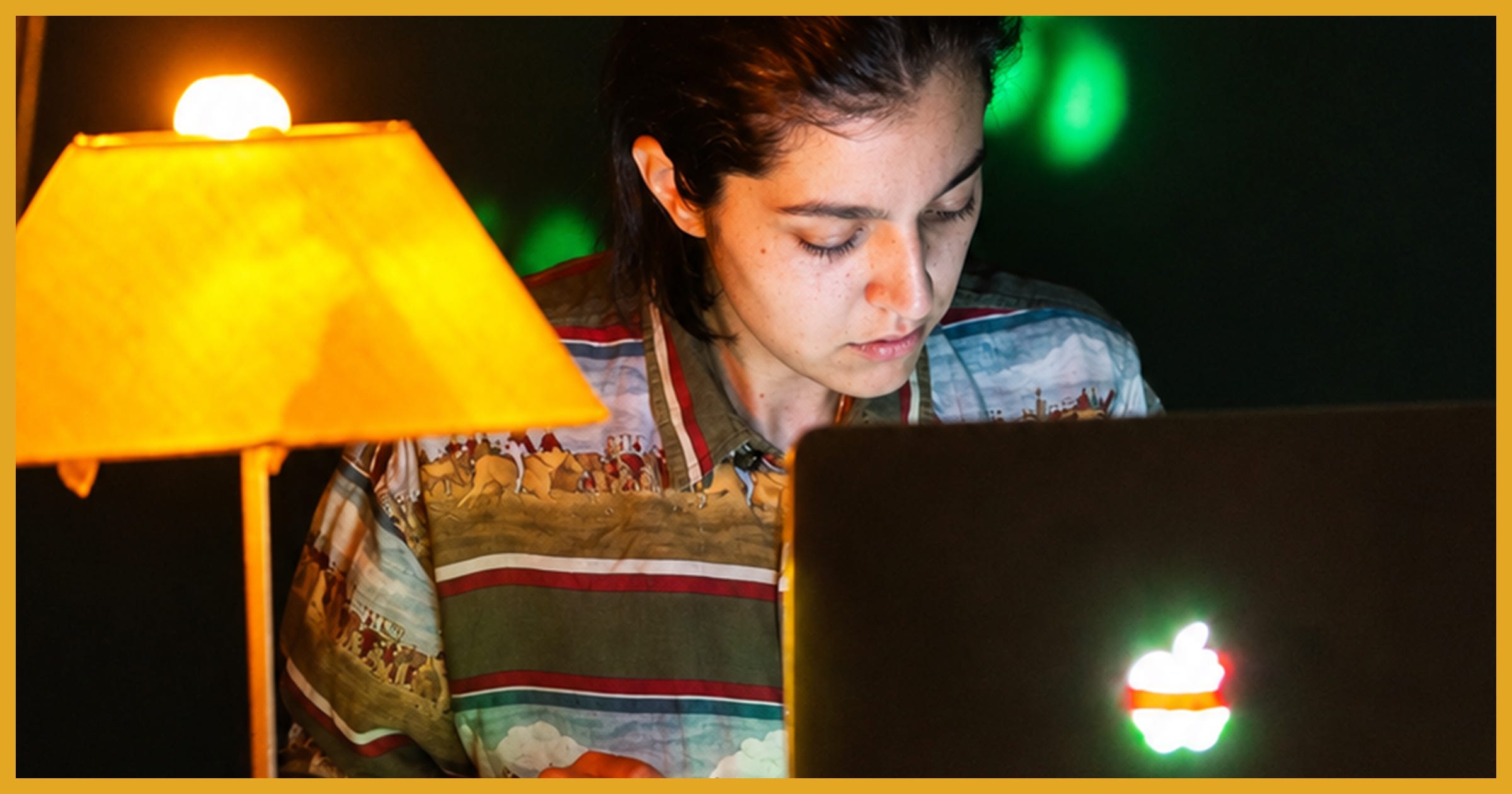
It’s still surprisingly sunny in London this morning, and we are joined by Anahita Shamsaei of Makaan Records. Originally from Iran, Anahita founded Makaan Records in London with the belief that “everyone deserves to be seen and heard”. The label and its community, developed by Anahita and her fellow Residents, focus on underrepresented artists from the regions of Southwest Asia, North Africa and the Middle East, giving them a platform to be heard. A large part of this is done via Makaan’s all-night events - often taking place at Fold’s Steam Room in London - where techno artists of different backgrounds take the stage, both literally and figuratively: with the help of projectors, musicians who cannot join the party physically due to visa restrictions are able to perform in places they wouldn’t have been able to perform in otherwise. Anahita, who is also a DJ, calls it a “station for everyone who has always been unseen and unheard.”
Makaan is doing important work, and I am very lucky to have had Anahita on for this issue. Keep scrolling past the first batch of recommendations to find out more about her story, about Makaan Records and its events, and how she listens.
WHAT YOU SHOULD BE READING / WATCHING / LISTENING TO
THESE KIDS ARE ALRIGHT: THE BEST NEW U.K. MUSIC (Bandsplain Podcast)
Yasi Salek of the podcast Bandsplain recruits London-based Australian music journalist Shaad D’Souza for an hour-and-a-half chat about up-and-coming UK artists they’ve been charmed by recently. I find it tough to really dig in and discover new artists in “listicle” formats such as this one, especially when it’s done on a podcast, but they keep it interesting by playing song excerpts where needed and mentioning some truly intriguing acts (many of which I admit I was not familiar with). Also fun to hear them thread the connections between a lot of these acts, which you might not know if you’re not embedded in those “scenes”. Holly Head, John Glacier, Lime Garden are all suggestions I can vouch for personally, the sound chalk makes was my favorite new find, and they almost made me think I could reconsider My New Band Believe (almost - it’s really not my thing but it could be yours!)
That’s really all you need to listen to this week: the band Drug Church. Not a new find but show #64 of the year for me was them headlining at Electric Ballroom in London (who’d have thought?) and I loved it even more than I thought I would. I had seen them open for Deftones at the O2 Arena (again, who’d have ever thought?) earlier in the year and they exceeded all expectations by absolutely smashing it on the big stage. The night of the headline show, a friend described them as “Sum 41 riffs with Henry Rollins on the mic”, I don’t know whether they’d like the comparison in so many words but I found it as funny as I did accurate and this is me telling you Drug Church is always worth your time. If you’re in Germany, France, or Spain, they are finishing their EU tour over there. If you’re in Australia, catch them next February.
Today’s newsletter was edited and delivered while listening to the new Porch Light album, “Hush”.
The interview with Anahita starts now!
Couple more recommendations in the next block below.
Hello Anahita, and welcome to How We Listen. First things first - tell us a little bit about you and what you do!
My name is Anahita Shamsaei. I’m now living in London, and I’m the founder and a resident at Makaan Records. Through my work in the humanitarian sector, particularly with refugees, I have always worked on the frontline and I’ve seen many who have faced restrictions and incredibly difficult circumstances, but still remained dedicated to their music. The kind of underground music and events we were involved with in Iran faced significant restrictions, and we didn’t have the kind of club spaces we have here in the UK. For me, it was just like a fight. And it was very male-dominated. I felt we needed more women in this scene. I felt I wanted to play techno specifically because techno is like a genre of resistance.
What made you start Makaan to begin with?
I felt that there are so many parties, so many events that are happening, but Makaan is not entertainment: obviously, we dance there, we enjoy, but there is a reason why we are there. Makaan is like a station for everyone who has always been unseen and unheard due to censorship, due to so many restrictions, borders, sanctions.
I saw so many amazing, talented artists within the regions, and elsewhere, everywhere. It doesn’t matter who they are, but that they’re being unseen. It started because I felt there was no space for us, any space where I felt belonging. And it felt like there was a necessity to make this a station for everyone.
Was a place, or a community, like the one you’ve created with Makaan, something you realised you were missing as you were coming up? Or is it something you look back on now and think, “I wish I had something like this back then”?
To be honest, Makaan started because I came out of my job in Istanbul, where I was a field investigator. Then I moved to London, and I was waiting for my partner, and I thought “let me do something.” I didn’t plan to make Makaan. I saw so many displaced people and refugees who could die on boats as they’re coming over, going through incredibly difficult journeys while still holding onto their dedication to music. That’s how much dedication they have. They must be seen. So who could do that? I thought that maybe I could.
So I started Makaan as a space for everyone to be seen, with the help of our residents. This space was missing.
In June, we had our tenth event - Makaan 10 - and it went really well. And it’s because of teamwork – anything can happen with a team.
How does your team work? And how do you get artists involved?
It’s me and the other residents. For mastering, my friend Bobak helps. Regarding finding artists, I don’t look at who has the most followers or visibility on Instagram. I look for very niche artists, who have even lost motivation. Because how can they sell their tracks on Bandcamp, or how can they be on Spotify, when there are sanctions?
That’s why we release music from that region specifically. They send [the music] to us, Bobak does the mastering, and we release it from here.
I know that a big part of it all is the live aspect of things, the shows you’re setting up, like the Makaan 10 party you just mentioned. What’s the goal behind these, and what do you hope people get from attending them?
Obviously, bringing more artists to be seen [is one of the goals]. We had so many artists that couldn’t come here because of visa restrictions, but we make it possible with a projector. The artists send me their video and set. There was one from Syria [for example]. I was looking for one in Iraq and I couldn’t even find them, to be honest. I do a lot of research to find artists.
I believe Fold has one of the best sound systems ever, and I believe everyone must be heard with that sound. It’s hard when you use the projector – people are confused, “what is happening?” So we have to explain it.
At some parties, we have the projectors, at others we don’t. That depends on the visa barrier. Otherwise we focus on unseen artists here – there are many amazing artists here that can be booked or be heard, but they can’t – because of competition, because of the algorithm, because of this system of capitalism and commercialism.
In Makaan, all lineups are artists that maybe people don’t know – it’s a cultural exchange of sounds.
WHAT YOU SHOULD BE READING / WATCHING / LISTENING TO -
GEESE NEVER THOUGHT THEY’D END UP HERE (Rolling Stone - £$£paywalled£$£)
So much has been said about Geese this year that I debated whether adding to the discourse made any sense at all. I read through this article without expecting much and was positively surprised by how it depicts four young kids from New York City grappling with levels of success that were new to them.
For the first time, they also address the much-quoted “psyop” allegations they faced and the fanfare that followed, as well as the Saturday Night Live performance that put them in front of an even wider audience to mixed reviews.
“We were just like, ‘Oh, my God. The whole fucking thing is fake.’ We were having a meltdown. Then we marched up to our label over email, the relevant team members, like, ‘How long have all our fuckin’ fans been fake, you sons of bitches?’”
WHEN BLINK-182 WAS MY NEIGHBOR (Vulture - £$£paywalled£$£)
Hate to bring you two paywalled articles in a row - you should be able to read a couple of Vulture articles with a free account, without subscribing.
I promise it’s a coincidence that this is the second time I reference blink-182 in the first two issues of the newsletter. This piece recounts the experience of a person witnessing the band record the original Stay Together For The Kids music video in their neighborhood. The video infamously had to be re-shot as it featured a wrecking ball destroying a building and was slated to start airing around 9/11 (the original video is the one that has been on YouTube since 2009, but the re-shot version is also available to watch).
The author, Sarah Shanfield, anchors their recollection of the tragedy around an extremely personal memory that I’m glad they shared, an answer you would not expect to the question “where were you when it happened?”
“Early the next morning, I was in the kitchen eating cereal alone in the dark and painting one fingernail black just to try it out. It was the second day of school, and my brother and I planned to be back on the ladders to watch the wrecking ball shred at 5:15 p.m. I heard rustling. My dad ran in wearing only his underwear and turned on the TV. He held his hand to his mouth as soon as the screen switched on.”
HWL #02 - The Mixtape
The second HWL mixtape is here too! With the excellent Ando San on the cover via his first song on new label Sumerian Records. And singles from upcoming records by Quinn Oulton, Haywire, and Soul Glo, as well as tunes by Aubory Bugg (whose new album just came out on Friday) and chlothegod.
Don’t forget to save the playlist so you can come back to it when convenient!
I’d love to hear about the beginnings, when you were younger and first getting into music and techno. How would you fall in love with an artist?
In Iran, it was mainly through my friends. And it was always techno, it was never house or deep house, it was always techno for me. It started with my best friend from childhood – he’s one of the residents at Makaan, Aram – he was taking me everywhere. And I wondered, “how come there are no girls around?” Something is missing, we need to be more visible. But now everything has changed, in Iran.
I used to find music from my friends. I didn’t even know most of the DJs from over here [in the UK], the known ones. People thought I was lying, but I wasn’t – because my friends in Iran weren’t showing them [to me].
How do you do it now? Of course, the record label and Makaan in general must have such an impact on how you discover music.
I listen. And I trust when people tell me that an artist is good. I go and check them out. It can be from the energy, but it won’t be the amount of followers – word of mouth for me matters more.
It’s really easy to curate a lineup of well-known DJs, people will come. But there are so many artists that are unseen, and what I want to do all the time is to bring them so they can be seen.
People will tell me to bring an artist because they’re well known – and I go “no way, there is no headliner.” I don’t believe in headliners. Everyone is a headliner. Everyone needs to play two hours. You don’t play two, three hours just because you are someone.
And because Makaan is non-profit, everyone helps. Shout out to all the residents, they’ve always been by my side and each of them helped me. Even the Notion feature [where you found out about us] it came through Sita [Shah, one of the residents].
Is there anything that, to you, separates one artist from another instantly, when you’re just discovering them?
For example – recently I got to listen to Kiss Nuka more. She messaged Makaan actually, and I saw that she’s always playing live, and she changed my perspective a little bit regarding sounds. I’m tired of constantly hearing repetitive techno – all of our residents feel that way, that’s why they’re Makaan residents, we represent with sounds, if that makes sense.
Taha, our other resident, he comes from Algeria. In one of our EPs – the track Sahara Raha – the vocal is from a person in the desert, in the Sahara. That’s why I say it’s a cultural exchange.
Kiss Nuka did that for me, and I was in shock. Because someone giving that frequency to me, which made my brain actually tired because of so many different sounds, I was just in shock about how amazing you can play live. Not everyone can get that, because people are used to that kind of techno in a way. It’s always educational – and Kiss Nuka is a well-known person in the community, who talks a lot about community, identity, and belonging. So she’s not just an amazing artist, but also a very good person.
How do you stay up-to-date with music news?
I do a lot of research myself. I love to download sounds specifically and add them to techno. Our residents always tell me about new people, or people also send me their demos. And through friends!
If it weren’t for Makaan - do you think you’d still be as active in your research?
Good question. Yes. I would like it even more, because it would be for me alone. It would be just Anahita Shamsaei, not Makaan. When you have that, it’s kind of a responsibility as well. But if it was Anahita alone, then I wouldn’t have it – and it would be even better. That’s the honest answer!
As you’ve said yourself multiple times - word of mouth is so important, it is for me too and it’s such a big part of this newsletter. I would love to hear about songs or artists that you have fallen in love with recently.
Taha One - “Dzayer” is a track that I really love. Makaan has also recently released Barzakh, a 10-track compilation featuring different artists.
Thank you Anahita, for joining How We Listen.
Thank you for having me. As I said, it’s all about teamwork. Through your platform, Makaan will be seen. And Makaan is not Anahita, Makaan is a station for everyone. So whoever wants to send their EP or music, they’re more than welcome.
Thank you for joining How We Listen for newsletter #02! Pleasure to have you here.
Again, if you haven’t subscribed yet, you can do so by clicking on the Subscribe button at howwelisten.co.uk
Any shares on social media are more than welcome.
See you in two weeks - but make sure you check out Anahita’s recommendation before you go :)