
Hello there! Thank you for being here for How We Listen’s 5th issue! If this is your first time - welcome. How We Listen is a place where we celebrate the joy of music discovery. It’s great to have you with us.
Today is Wednesday, the air is humid but not freezing just yet in London, England, and to keep the Autumn cheer up I’ve got an interview with the lovely Mitch Stevens coming your way. Plus a shortlist of articles & podcasts that stood out for me since the last issue came out. Thought you’d find them interesting too!
Mitch wears many hats: among other things, he is a music publicist, a consultant and a manager, and he does all that under the Revenant Earth umbrella. I know Mitch through his work with alternative/heavy bands like Static Dress, Loathe, and SPEED, for which he has done incredible, boundary-pushing work, and I have always been impressed by how diverse his roster has been through the years, working with rappers, electronic artists, and more. He has a knack for taking some of the most promising new acts to the next level via carefully curated press campaigns that place them in outlets you never thought you’d see them in. Mitch loves music first and foremost - like all How We Listen guests - and our long conversation touched on finding community through music, his own newsletter major thread*, how having a diverse roster ultimately benefits all of his clients, and how he listens.
If you like what you see, may I also point out the first four issues are available to read for free? And that you can keep track of it all on our Instagram?
Keep scrolling for this week’s recommendations and the interview with Mitch, and I hope to see you again next time! I’ve been interviewing some incredible guests that I’m very excited about, and I can’t wait to share them with you all.
This issue of the newsletter was finalized while listening to the cathartic album by PISS that came out on Friday.
WHAT YOU SHOULD BE READING / WATCHING / LISTENING TO
Every issue of How We Listen comes with a 7-song playlist, 7 standout songs that I reckon you’ll enjoy. Here’s what you’ll find in it this week:
The half-Canadian, half-American, London-based indie duo Tommy Lefroy are on the cover this time around - their debut record “The Precariat” is a must listen.
Mitch highly recommends daine who sits somewhere in between alt and hyperpop and emo and much more, her new album is out on Friday.
Saba is back with the Pivot Gang collective and dropped the banger that is “Location”, and also reuniting are Lonely The Brave (with their original lead singer too.)
Kareen Lomax’s OFFLINE was the first single off her new album so it’s a few months old but still worth finding time for, Mei Semones’s formula for indie includes jazz and bilingual lyrics (English + Japanese), and oh let’s not forget that Moses Boyd has a new record out as well.
Don’t forget to click “Save to Your Library” on Spotify so you can come back to the playlist!
HOW DO MUSIC LISTENING HABITS CHANGE WITH AGE (Stat Significant)
A few years after a great data-led article on the common experience of finding it harder to discover music as we age, newsletter Stat Significant once again dives into how listening habits differ by age group. They look at skip rates, song ratings, average listening time and more, leading to findings that are less intuitive/predictable than they seem on the surface.
BILLY CORGAN ON THE RETURN OF ROCK, STANDING BY MARILYN MANSON & OUTLASTING HIS HATERS (Popcast)
The New York Times’ Popcast certainly does not need me to recommend it to find an audience, but I found this too entertaining not to share. Billy Corgan’s combative self shines through - you could argue he came in looking for a fight, or at the very least that he didn’t let off hosts Jon Caramanica and Joe Coscarelli when he disagreed. Topics touched on include his disdain for critics, seeing a little of himself in Kanye West (to clarify - early Kanye West), and his much-discussed friendship with Marilyn Manson. This is up there with the most amusing as far as music podcast episodes go.
TWISTED TEENS HIT THE BIG TIME (Nina Corcoran)
If you’ve seen anything about the rise of Twisted Teens in 2026, you have at least wondered what the hell is going on. They’re about to release their third record of 2026, signing to Sub Pop somewhere in between the first and the third one, and have ended up winning over anyone who’s given them half a chance (myself included). Nina Corcoran profiles them brilliantly here, and while it opens up more questions than it answers (they almost talk more about a finished fourth record than the three released or releasing in 2026), it makes you want to stick around, even if just to see how crazy it can get with this band. Also, there are quotes for days in this one. I’ll leave you with my favorite:
“Yes, everyone in Twisted Teens plays the fiddle except their current drummer, Howe Person of the Deslondes, who, by Hollywell’s count, is the band’s 13th drummer.”
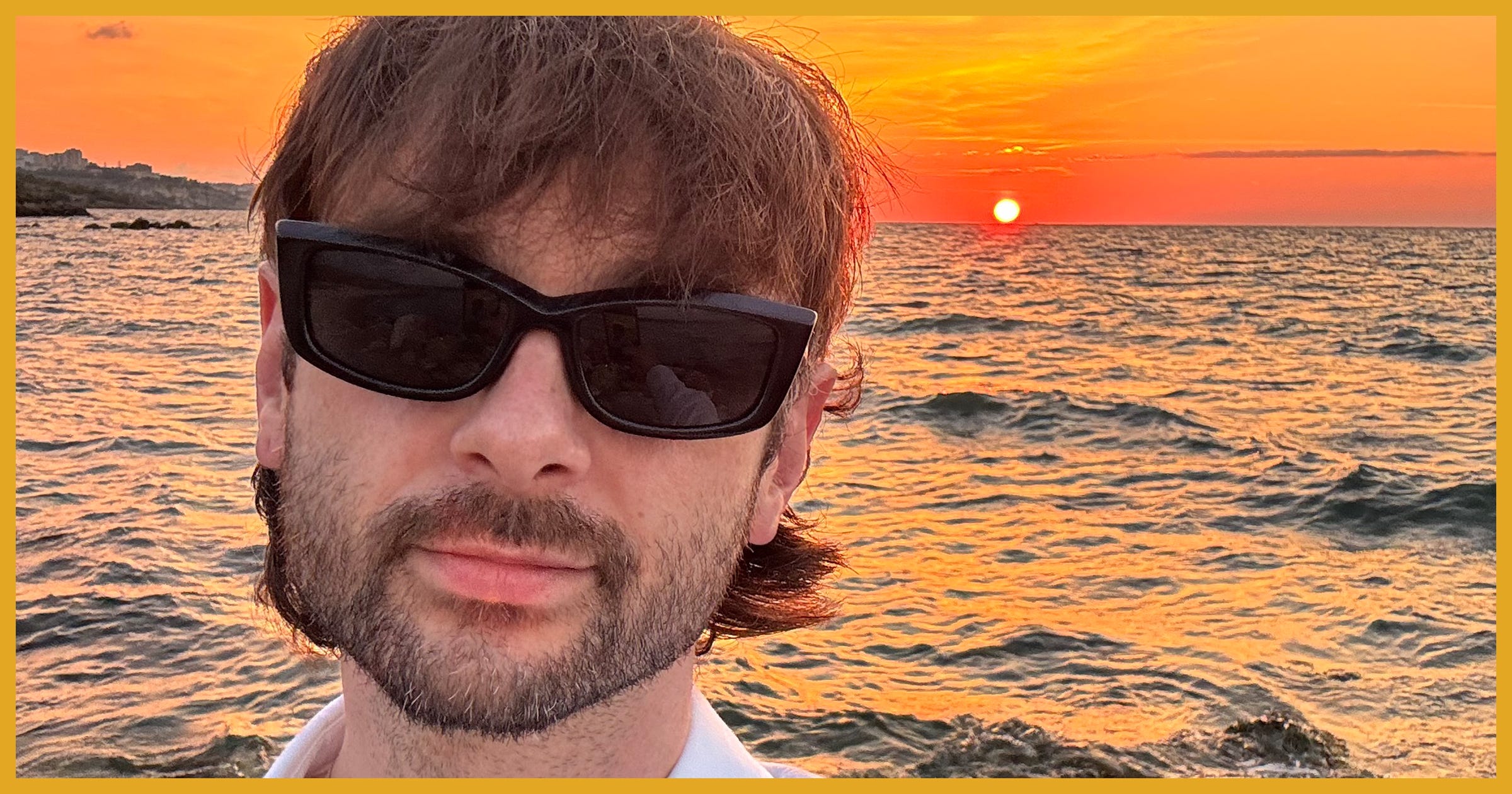
Hello Mitch, and thank you for joining me on How We Listen. Let’s start with the “easy” one - who is Mitch Stevens in a nutshell?
I’m a music fan primarily, before any of the other stuff that officially pays me: I’m a PR, a publicist, a manager, and consultant for various things.
What are you working on these days?
Loathe is a very fun one. I work with Static Dress, who are a dream as well. I work with Speed from Australia, who are absolutely killer. I work with John Glacier, who’s a London rapper. It’s really across the board in terms of the stuff that I work on. I work across a few label rosters, including Flatspot Records, as well as Outbreak Fest which is a big one.
When hearing about the artists you work with, I can tell you have a clear affinity for rock and heavy music, but that you’re also involved in plenty of other genres. Would you say that reflects your personal taste, or is that just where your career has gotten you to?
I have always been such an omnivorous listener. From the youngest of ages, I was listening to everything that would come my way and being fascinated with everything. I grew up listening to punk and hardcore and metal because, in all honesty, that was really the community that accepted me first. I loved the music, but I loved all music, and have always loved all music.
I’ve always leant very strongly towards where I found community. There’s been periods where I dipped really strongly into the club scenes and into electronic music as a whole, and then there’s been times where it’s been rap, or it’s been pop, or various other things. I tend to find that the greatest secondary thing about music is the unifying factor of it, and I get a real rush from connecting with people over music. So I find that my involvement in certain worlds comes from where I find that community.
Music PRs are often “segregated” to working on a specific genre. That is not the case with you. What do you think sets you apart in the eyes of these artists and their teams?
This is not to slight anyone who works within a specific genre - because I think we all kind of get pigeonholed within PR - but I have a real problem with PRs only sticking to one genre. The reason for that is you are not giving the genre you work within a fair shake. Within rock especially, people tend to stick to your Kerrangs, your Rock Sounds, your Metal Hammers, and all of the incredible grassroots publications that we have around that scene. But who’s to say that a metalcore act, or a hardcore act, can’t go and feature in a big mainstream publication that isn’t specialist? And that’s not to say that those rock publications aren’t completely worth their salt. They’re incredible, and they do so much for broadening the horizons of tons of listeners in terms of the subgenres they cover, but keeping one style of music to one publication feels a little bit segmented and unfair.
I think that there is something to love in every single form of music, and I think that Kerrang does an incredible job of actually broadening out the scope of what they do beyond rock as much as they can. Working within a genre just feels very limiting as well when it comes to contacts, when it comes to the way you speak about music, the way you consume music, your knowledge base, your community.
I can give you an example of how I got into the heavier side of rock music in terms of the work perspective, because I’ve only really been doing that for six years, and I’ve been in PR for 13, 14 years now. I started by beginning to work at a PR company, telling them I’m a fan of all music, and to “give me everything”. And for some reason, with every company I went to, I kind of bypassed the heavier acts even though I grew up being into punk, hardcore, metal.
I have been very blessed in that I’ve worked at a lot of great PR companies where I’ve been able to be part of the stories of a lot of artists’ growth and rise, and they’ve become very popular. And then also some artists that are already extremely popular, and I’ve been able to help continue that story into what they were doing next.
I found a band that had a couple of music videos online, and this is right at the very beginning of doing my own thing, and I just hit them up on the email that was on their Instagram. It was Static Dress, and I said, “hey, I worked on this, this, and this. I think you guys are incredible. I really want to help you build, and not just within rock press, but also in all of these other worlds where I’ve gained all these contacts and relationships. They were intrigued, and the most important thing was them and their manager at the time - they just let me roll with it, trusted me implicitly, and within three months they had a double-page spread in i-D Magazine, which was unheard of for a band with screaming in it. They’ve gone on to do things with all of these incredible mainstream music publications that no one within their world really had access to.
From there I went, “okay, so the formula works. Let me try and apply what I know to a load of artists that I love within a scene I love.” That’s where I started to pick up a lot of heavier acts. That’s been one of the most rewarding things about doing this, in my whole career: uplifting those kinds of artists who have uplifted me my whole life.
You’re in the newsletter game as well, with major thread*. How did you end up doing that in between the thousands of things you’re already doing?
Like I said, I’m a fan of music first and foremost, and a fan of culture first and foremost. Within culture, and within my job, I’m exposed to a lot of people from cultures that I don’t work with but I’m very interested in, and have very enlightening conversations about who they are, what they do. That’s what I find interesting about journalism: getting behind the art.
You know what the art is. Anyone can describe what it is, but no one knows the “why”, and more than that, no one knows the “who”. And you’ll probably find that the “who” informs the “why.” So within major thread*, it is friends that I’ve accumulated, or people that I am extremely intrigued by within culture, getting to know the “who” a bit deeper, and that then informs the “why”.
[For example] Johnny Whitney - with The Blood Brothers, and now Evil Island - he kickstarted a whole genre which also had its own fashion style, and had a load of clones around him. And I really wanted to know about all of that. And Heather Marlatt, ex SALEM, was a a very similar thing. They were such a big part of the creation of Witch House, but she now runs a farm and she’s a therapist. And I was very, very keen to understand how someone who came from such an intense group, or at least outwardly an intense group, comes to that. It’s digging at the root of people you thought you already knew.
In the post that introduced your newsletter, you say that “in order to become a good music publicist, you have to have as keen an interest in the people behind the art as you do the art. You are the mouthpiece for the artist.” I think that describes it as succinctly as someone could put it, and while it doesn’t apply to just being a publicist in music, it truly does for that in particular. When did you come to the realization that doing that was your calling?
I just got finished reading Melissa Auf der Maur’s book, and something that I really loved is that it felt like our paths beginning in this [world] were really similar. I was always the very “wide eyed person” [when it came to music], I was always fascinated. I didn’t realize it until I was much older, but I would be the person that after the show - no matter how big the band were, no matter who they were - I would just go up and approach them and speak to them like they were a friend. And I just very inquisitively wanted to know not necessarily about certain things to do with the music, but about them and what they did. And I’d been doing that since a young age, to the point where my friends would go to shows and they would take me along because they knew that I’d just go up to someone and speak to them, and then they could go up afterwards.
Years down the line, I realized that I’m just very inquisitive and descriptive about music, but similarly, I want to tell people about all of these things that I’ve heard and listened to. I actually thought when I was younger that journalism was my calling and I did a degree in music journalism, which is very rare nowadays. While I was there, I had a couple of friends that I grew up with at school who were doing very well making music, and I’d always been in bands, heavy bands, metal bands. Then when I got to uni, I started making electronic music just to help me calm down late at night. That started doing very well thanks to some extremely wonderful people who put me in contact with the right people. I started being able to play shows, do tours. I was getting press myself, which was extremely exciting.
But one thing I really loved was just reaching out and telling people about the music that I made and who I am. And I started to realize that maybe I’m not the person writing the articles, I’m the person informing the people writing the articles about this thing. From there, I went and did a load of internships while I was still at uni. Once I finished uni, I got a load of different jobs, started running my own label on the side. I was doing the press for that as, like, a case study. I had some really great successes with that label too and realized, to be honest, that the thing that I could do to put all of these loves I have around this one part of music would be to do press, because it’s the connection with people, it’s the connection with the artist, it is the going to shows, it’s seeing the reaction from the public about something that you’ve recommended. It’s also seeing how people interpret your words about this artist, and this music, into their own thing, and then seeing the artist’s reaction to all that.
WHAT YOU SHOULD BE READING / WATCHING / LISTENING TO
I WRITE THE SONGS (Mark Davyd)
Mark Davyd - founder and CEO of Music Venue Trust in the UK - has written in depth about the shortcomings of British collecting society PRS for Music, especially in regards to how they affect grassroots venues and their survival. The four-part series that he published earlier this year was one of the most informative pieces of music writing I’ve read in 2026. In this follow-up article, he speaks of a trial that Music Venue Trust is running in more than one in eight grassroots music venues in the UK, with music recognition technology that has the potential to solve several of the issues at play. It’s early to consider the results conclusive - Davyd himself is very clear on this - but there are useful takeaways already. Will the people who can make a change actually take notice?
RAYE | HOW SHE ESCAPED HER RECORD DEAL AND BECAME A SUPERSTAR (And The Writer Is… with Ross Golan)
Second mention in two issues for British star RAYE. Last time, she was opening up on social media about how bots had sabotaged sign-ups for presale to a special show. On this podcast, she has plenty of stories about her career, her family, and her advocacy for songwriters to be treated more fairly and get the splits they deserve on songs. This was a fight she endeavored to embark on after hearing about how her own grandfather was screwed out of what he was owed for music he wrote.
IS 2026 THE FAKEST YEAR IN MUSIC? (NPR)
Fairly comprehensive summary of all the music industry discourse that escaped containment in 2026. The Betty Hammerschlag story had not entered my orbit and goes straight into my Read Later.
This TikTok is probably going to lead me into my next rabbit hole: a Mexican movie (that was never popular in Mexico) became popular in the former country of Yugoslavia, inspiring musicians there to develop a (very popular) genre called Yu-Mex?
You were talking about community in music when you said the one around rock and heavy music was the first one to accept you. Do you remember how you stumbled upon it - was it the music first, or was it the people around it?
There’s two stories. With rock music… my mum has always been super into music. She was, for the most part, a single parent until I was a bit older. Obviously, as a single parent, you expect your children to help you clean the house on a Sunday morning, and I would be woken up to all sorts of different kinds of music. So it could be Rumours by Fleetwood Mac one day, it could be Purple Rain by Prince one day. It could be Dookie by Green Day another day, and it could be Nirvana’s Nevermind.
So I was always integrated within rock music from a very young age. Superunknown by Soundgarden was another really big one. Then as I got older I had an uncle who I loved who would play me more modern rock music. I’d go into his room and watch him play FIFA, and one day he was listening to the first Slipknot record, and it was the only one out at the time. I remember bracing to his door frame while listening to it, thinking “this sounds so scary, but so powerful, and I love the way it sounds.” And he lent me the CD. I went back and I hammered it, and then I discovered the Kerrang Channel. From there, I wanted to tell everyone I knew at primary school, and then early secondary school, what I loved.
At secondary school, especially, that’s when the culture that you consume begins to inform your community in a big way. I think now, where the internet is a bigger thing, it’s become less and less like that, and there’s less subcultures around. But back then everyone was attached to a subculture, and even if you were into other things as well, whatever the domineering subculture you were involved with was, that’s what your community was.
I found hardcore via My Chemical Romance, I was obsessed with that band. You don’t really get it as much anymore because people aren’t really buying as much physical media, but within liner notes of a lot of records, especially by rock bands, there would be a load of bands that they would thank, and for bands I was obsessed with I would go and read those liner notes and I would check up every single band and listen them. A little bit later, I was on MySpace and I would read the influences part of bands’ pages and their top 8s. Around the time that Three Cheers for Sweet Revenge came out, I believe, there was a dedication for American Nightmare on MCR’s MySpace page, who to this day are still one of my favorite bands in the world. I remember listening to Background Music, which is my favorite hardcore record of all time, and just losing it. I found Glassjaw within that as well, and Glassjaw was a similar thing, maybe closer to My Chemical Romance in terms of sound.
So I started seeking out shows. I’m from just outside of London, and my mum was very liberal and would let me kind of go wherever I wanted from quite a young age. I would just run around to shows – I’d sometimes go with friends, sometimes by myself. If it was someone I loved, I would go.
From there, you start to get into the community. A band called This Is Hell - who have just reformed and started releasing stuff again - they were really instrumental in me finding a community. I used to go down to Brighton a lot, and there were some amazing shows at this venue called Engine Room, which was I think like 100 or 150-capacity, and that was a really exciting time where it was maybe not straight up hardcore, but you know, deathcore was just becoming a thing. You’d see these great mixed bill shows where you’d have Bring Me The Horizon headlining off the back of their first EP, or leading into that first album, and you’d have Dead Swans and The Ghost of a Thousand and all of these incredible bands that are now in the pantheon of UK hardcore for different reasons, all playing together.
If you compare that excited teenager that you were, ready to go see every band you love and find out about new ones, to who you are today, an adult with a job but still very passionate about music, how different is that process of discovery?
You would think that as I’ve got older, as technology’s advanced, as I’ve also got to the privileged position where I’m sent music and bands in advance of official launches, that that’s how I would find all my music. It started where it was very word of mouth, and I’ve been shown things by people whose taste I trust, and then it’s gone to where the internet’s proliferated, in the blog era, where I’m pretty much exclusively finding music from blogs and websites and learning about this cool wave of music. Then, as I started to get involved in music professionally, it went back down, where I’m getting promos from people that I really trust, or they want me to work on something, and I’m still involved in the internet.
Now I’m right back at the bottom again, where it is almost exclusively word of mouth. I have, I would say, over 100 friends whose tastes I trust implicitly and who are so tapped in. I’d say 85% of my music discovery nowadays is going to shows, word of mouth from people I trust, hearing of things through the grapevine, then seeking them out. And I encourage every single person who wants to get into music to never let that die. That should be your number one group: you should have a group of people, or you should be going out and finding that group of people who you rate and you trust enough to put you onto shit, and you should be returning the favor.
What’s the actual step-by-step process? If a friend recommends something, do you add it to a list? Does it go straight into your streaming queue?
Sometimes I have notes. I have ADHD so if someone tells me to do shit, I better do it now because God knows where that’s going to go. I’ve become very good at list writing, so that’s where the list does come in. But I would say a good 7 times out of 10, if someone hits me and they’re like, “yo, you should listen to this”, I listen to it there and then, if I’m not doing anything.
Caden Clinton, who is the drummer in an amazing band called Pool Kids who are signed to Epitaph, is just as obsessive about music as me. There was a period this summer where he was sending me two to three things a week, but every single thing he sent me was mind blowing and he’s got my taste down to a T.
I don’t have my headphones in right now, but I would say for a good 80% of my day I have my headphones in. So at any point, my phone is just a portal. I just click it. I do tend to have a list running, but I actually got through that list this week.
I realize this might be a slightly loaded question, but I know you’ll have a great answer. As a publicist in 2026, what do you think is the value of music press these days? Feel free to interpret the word “press” as widely or as narrowly as you want.
I hope you’re ready for a TED talk, my friend! This is going to start off as a very fatalistic thing, but it’s leading somewhere positive. I always say to people that working as a music publicist in 2026 is like playing the violin on the Titanic, and the reason for that is because you have to keep on smiling and playing along, even though you know the ship is going down, and you’re the last to get off.
I say that because traditional music press is not, for the most part, seen as valuable by management or labels. Labels, especially, would rather throw that money into digital marketing and into things where they can see really see quantifiable numbers. A lot of labels nowadays have KPIs they need to hit. They want to spend the budget that they have on things where they can see it hit discernible KPIs.
Music press has never been that. Even when it could help you sell records, you could not say how many it was helping you sell. Nowadays, it definitely does not sell you records, but it is extremely valuable for fan acquisition, and fan acquisition is 10 times more valuable than – I would say – just selling a record, because what fan acquisition is, is a connection to someone for as long as you can keep their attention. Keeping their attention is done via cultivating that connection through narrative, through direct communication. Music press, publicity, and the PR’s job is to help you hone your narrative in a way that feels authentic to you, and if a music PR is doing great, you will be kept on, and they will help you develop and evolve your narrative in a way that feels not only authentic to you but authentic to the people that you are trying to reach. Once you have reached those people, they’re locked in with you for life, or again for as long as they decide to stay with you. Hopefully, for a long time.
Being on the cover of The Guardian Film & Music is not going to sell you 20,000 records first week. But what it might do is it might get the demographic of the Guardian reading that and going “that artist sounds interesting. I’m going to go check them out at a show, and I’m going to stream their record 5 to 10 times before I go to see them play at that show”. Then, when they’re at that show, you have the opportunity to really blow them away and to drill in what you are, who you are, help them gain a bit more of an affinity. Once they’ve done that, they buy the merch. A few more carefully placed press pieces, a few more curated press pieces [targeted at] certain demographics… You’re continuing to build a wide-reaching, diverse audience that are all obsessed with what you do for different reasons. Then word of mouth comes into play.
So what music press is now, for me, is the catalyst to a diverse, engaged, hopefully adoring audience who know who you are and see you. As much as an audience member wants to be seen, they also want to see the people that they can watch on stage, and I think that that ecosystem is maybe the most important thing of engaging with art on any level.
That is very well put. It’s a conversation I’ve had countless times myself and - I say this as someone who used to be in music PR and abandoned ship - publicists are the real lifers in this industry!
They are. They’re the OG fans. They are the ones that cared, they cared about this enough to make it their career… I think I’ve I said this in a newsletter post that I did: working in music press and working in music management, you’re essentially in a service job. You give up your own comfortability and a lot of your personal artistic creative ambition for the bigger purpose of someone else’s. PRs do that on a day-to-day basis. That means that they are really in this with you: they’re in the trenches. I don’t think there are very many people within the ecosystem of the music industry who are more passionate than PRs.
Let’s close it up with your recommendations, Mitch… Give us something to fall in love with.
I’m going to give you one that I found myself, and that’s Eilish Constance. She is 17, she lives in LA, and she makes this beautiful, kind of glitchy, electronically informed - I guess you’d call it “folktronica”. It sounds like you are in her room, within her daydreams. Every single song feels like that, and it’s so beautifully intimate, but so expansive at the same time. She is an incredibly evocative writer, and the way that she delivers those words is so unique that yeah, you really feel like you’re being swept away in the daydreams of a 17 year old woman, which I think is so wonderful.
Then I’m going to do one that I have been referred to… The Ritornello Form, which is actually a band that Caden Clinton sent to me. They released a record at the end of June called Majority Rule which is just really brilliant. It kind of reminds me of… there was a period where indie was really quite mathy and fiddly with the guitar playing, and the time [signatures] were really interesting, and this gets a bit heavier at points. It gets a bit more leftfield sometimes, but that really impressed me. Caden [was like], “you are going to love this,” and that was one of many recommendations from him.
I’m going to do one recommendation that I have known about for a very long time, but they are only now beginning to get the love and respect that they deserve, and that’s an Australian artist called daine. They’re from Melbourne. I actually worked with them from the age of 16, and they were making emo-rappy kind of stuff, kind of in the vein of Lil Peep, but you could just tell that they had this incredible affinity for writing hooks. What’s been really gratifying with daine is they’ve gone through the major label process, they’ve come out of the major label process, and they’ve found a home on a great independent record label, and have developed their sound. If you’ve followed them since the beginning, you can kind of see how their tastes have changed and grown and become their own thing. They did a song with Oli Sykes, they did a song with Kreayshawn… they’ve done lot of different stuff and they landed on a debut album which comes out on the 6th of November, it’s called In Endless Awe & Agony. They just land in this really nostalgic spot for me that reminds me of when I was 16-17 years old, laying in a field listening to MGMT with a two-liter bottle of Strongbow cider in my hand. But also at the same time, while listening to it, it makes me feel kind of sad that those days are never going to exist for me again, and I think someone whose sonic palette can make you feel that breadth of emotion, especially in pop music, that is someone that we should hold really close and really tight.
I’ll give you some heavy bands as well. I’ll give you multiple heavy bands. So Far So Good – extremely, extremely heavy, Knocked Loose-style metalcore. FLESH CREEP - the most amazing, tear-out hardcore. Eternal Rin – an amazing shoegaze-y artist who also loves nü metal, but it’s done through this pop lens which I think is so beautiful and so immersive, and it’s all inspired by horror video games.
Thank you for joining us, Mitch!
This interview was edited for length and clarity.
Thanks, as ever, for giving some of your precious time to this newsletter. See you in two weeks, but in the meantime - check out a song by Eternal Rin, one of Mitch’s heartfelt recommendations